
Graphite Performance Comparison
Ion Implantation Beamline Aperture | OEM graphite -vs- VitreSeal™ vitreous graphite
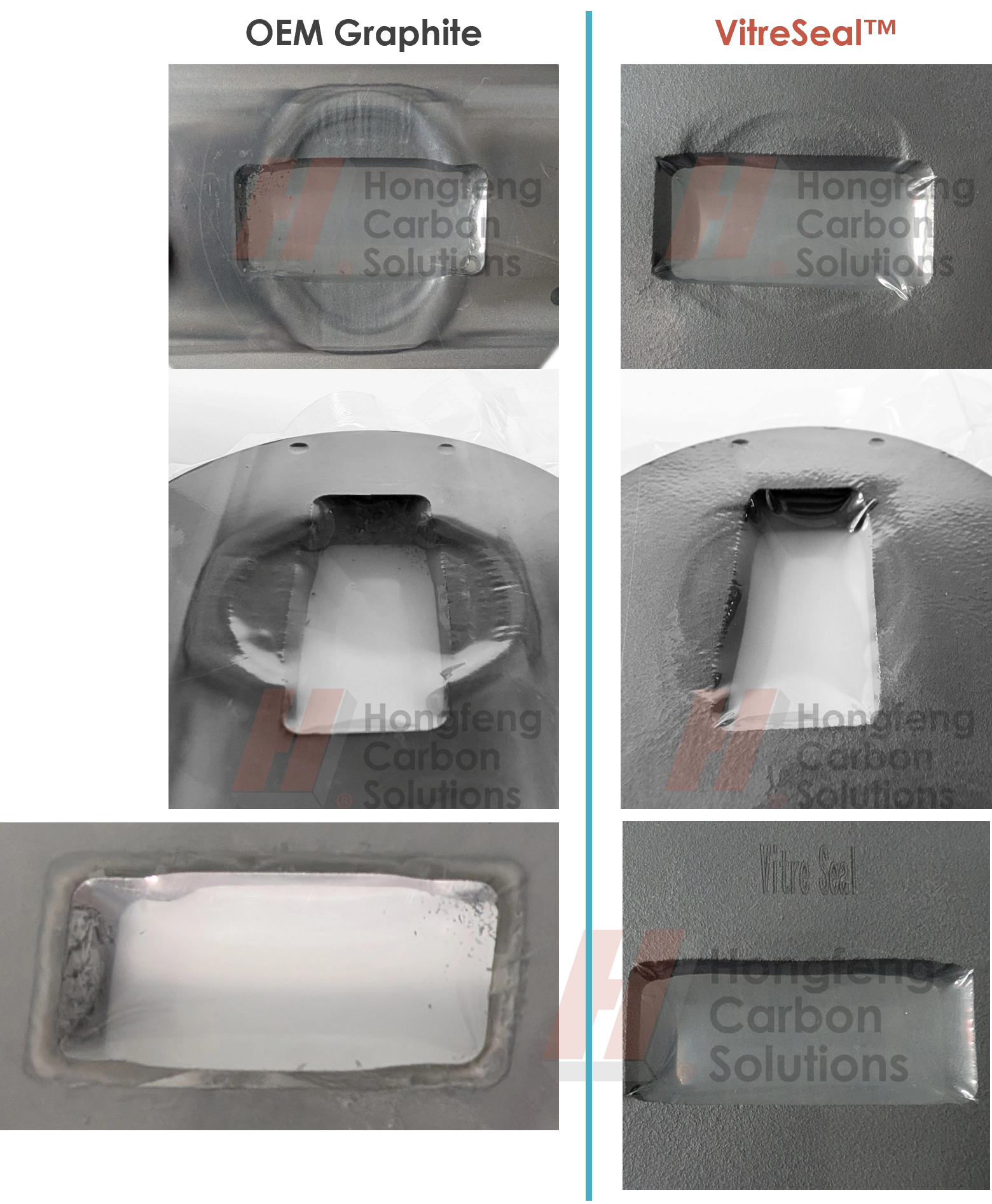
The images below show a side-by-side comparison of a baseline OEM graphite aperture and a VitreSeal aperture following an OEM-defined equipment cycle for long-term study. The apertures were used under identical real-world operation in a high current implanter. The goal being to compare the performance between OEM-graphite components and VitreSeal™ vitreous graphite components.
The latest generation ion implanters use higher beam currents and deliver greater wafer yield and purity, as well as reduced downtime and longer life cycles. Additionally, for 2 nm chip manufacturing (GAA nanosheet transistors), the requirements on ion implantation become dramatically more stringent. The 2nm architecture critical challenges including ultra-low energy, high-dose precision, precise beam angle control, near-zero particle adders, elimination of metal contamination near detection limits, and dose uniformity and repeatability. The newest implanters from Axcelis Purion Evo-class and Applied Materials VIISta platforms utilize close-loop AI process control, higher beam currents, and longer source life with lower downtime for extended production runs.
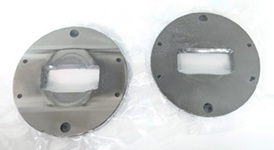
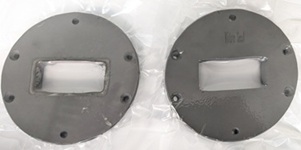
The OEM graphite aperture shows the following characteristics, which are typical for a traditional high-purity graphite material:
- Surface erosion and pitting
- Outgassing and surface film accumulation**
- Edge wear and chipping
- Particle generation
- Dimensional change
**Both apertures are encapsulated in plastic for safe handling, but streaky discoloration is visible on the OEM graphite parts indicating outgassing and surface film accumulation. Image brightness and contrast has been enhanced equally for clear visibility.
VitreSeal™ Performance Advantage

Hongfeng Carbon Solution's VitreSeal™ process delivers a superior durability and stability in ion-implantation and beamline applications that minimizes wear. Vitreous impregnated graphite is commonly known as "VGI." It is not a coating like PyC that can be prone to cracking or flaking. The VitreSeal™ process fills the pores of the graphite creating a pure Carbon, non-porous material that maintains properties of the original graphite substrate and can be optimized according to defined material properties.
- Reduce Particle Emissions - Critical for the enhanced particle-control architectures and sub-10 nm beam-spot precision. Fewer particles reach the wafer → higher yield. At 2nm architecture, particles can be killer defects.
- Reduce Outgassing - Supports the ultra-clean beam lines required for high-energy implants. Reduces energy contamination and residual-gas effects.
- No Metal Contamination - The pure-Carbon material minimizes the risk of metal ions being sputtered into the beam, which is critical when contamination budgets are low.
- Resists Beam Erosion - Maintains beam optics and dose uniformity over longer runs with reduced film buildup and flaking, which can later become particle contaminates.
- Longer Life - Higher beam currents and longer source/tool uptime mean components stay in dimension longer. Apertures, liners, and electrodes last longer before replacement.
Newer tools already emphasize reduced downtime; VitreSeal™ extends the life of the consumable graphite parts that still limit that downtime and are critical for latest generation implanters; especially 2nm GAA nanosheets.
Contact us to request samples or learn more
sales@hongfengcarbon.com


